
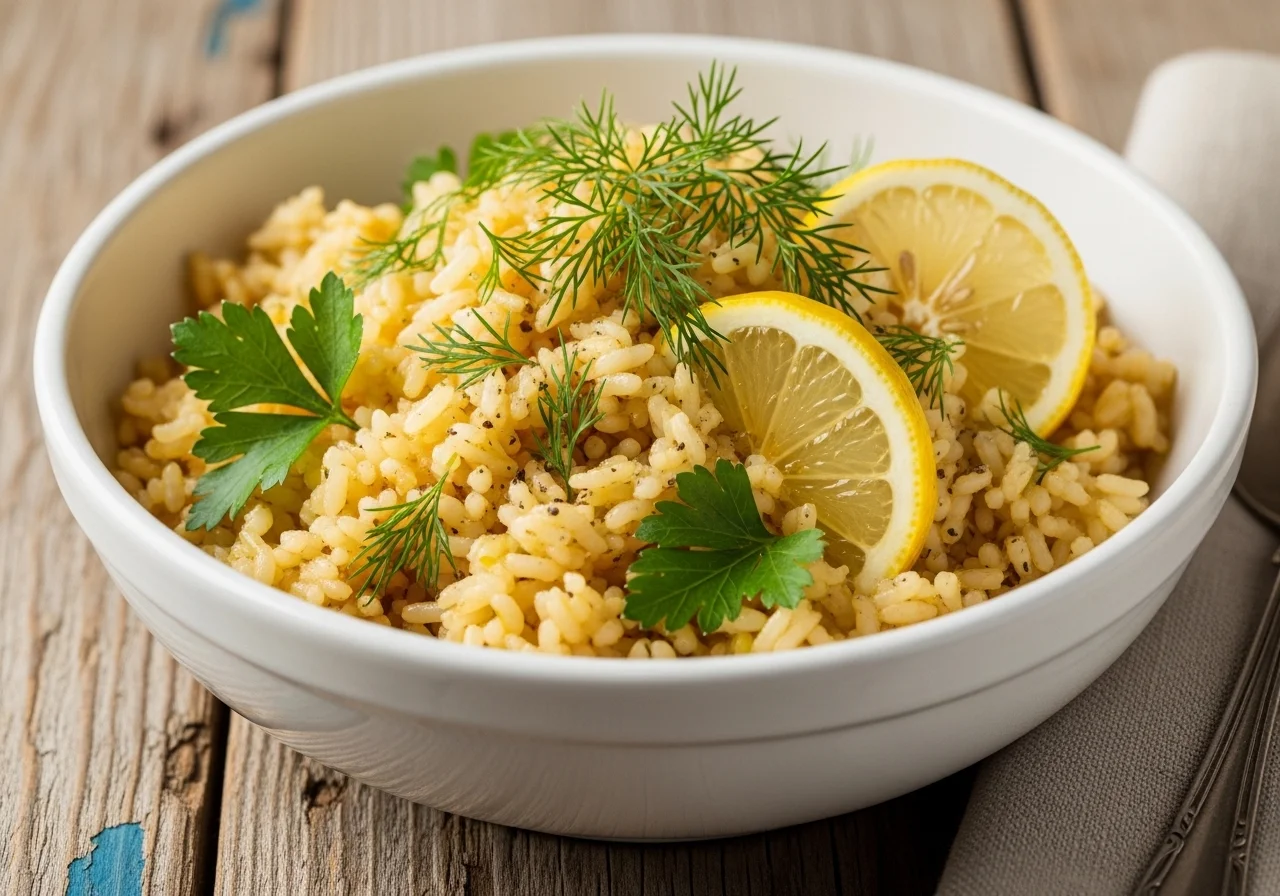
Imagine fluffy, golden rice perfumed with garlic, fresh herbs, and enough lemon to wake up every single one of your taste buds. That’s Greek lemon rice — and once you make it, you’ll wonder how plain rice ever satisfied you.
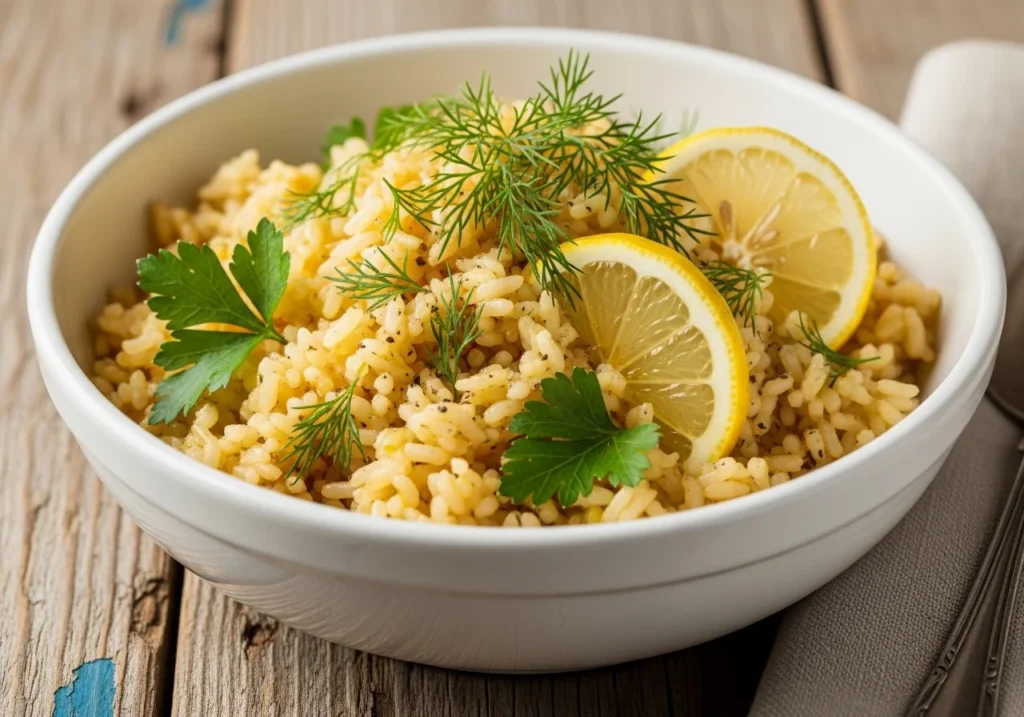
Let me be honest with you. For a long time, rice was just… rice. White, bland, cooked-on-autopilot rice that existed only to prop up whatever the main event was. Then I stumbled into a tiny Greek kitchen — not in Greece, admittedly, but a neighbor’s apartment in Chicago — and everything changed. She handed me a spoonful of something golden and herby and bright, and I remember thinking: why has no one been feeding me this my whole life?
That was Greek lemon rice. And I’ve been making it ever since.
This isn’t a complicated recipe. It doesn’t require fancy equipment or obscure ingredients. What it requires is good olive oil, fresh lemon, a handful of herbs, and about 30 minutes of your time. The result? A lemon herb rice so flavorful it can single-handedly elevate a weeknight dinner from “fine” to genuinely memorable.
Ready? Let’s get into it.
What Exactly Is Greek Lemon Rice?
Greek lemon rice — known in Greece as ryzi lemonato — is a simple stovetop rice dish cooked in broth with olive oil, garlic, lemon juice, and fresh herbs like dill or parsley. It’s bright, aromatic, and deeply savory all at once. Think of it as the Mediterranean answer to rice pilaf, except with more personality.
It shows up everywhere in Greek cooking — alongside grilled fish, tucked next to roasted chicken, or piled under a scoop of braised lamb. It’s the kind of side dish that doesn’t compete with the main; it completes it.
Fun fact: The word pilaf actually has Persian-Turkish roots, and while Greek lemon rice shares DNA with rice pilaf, it leans harder on lemon and herbs than a traditional pilaf. So technically? Same family, different personality.
What You’ll Need: The Ingredient Breakdown
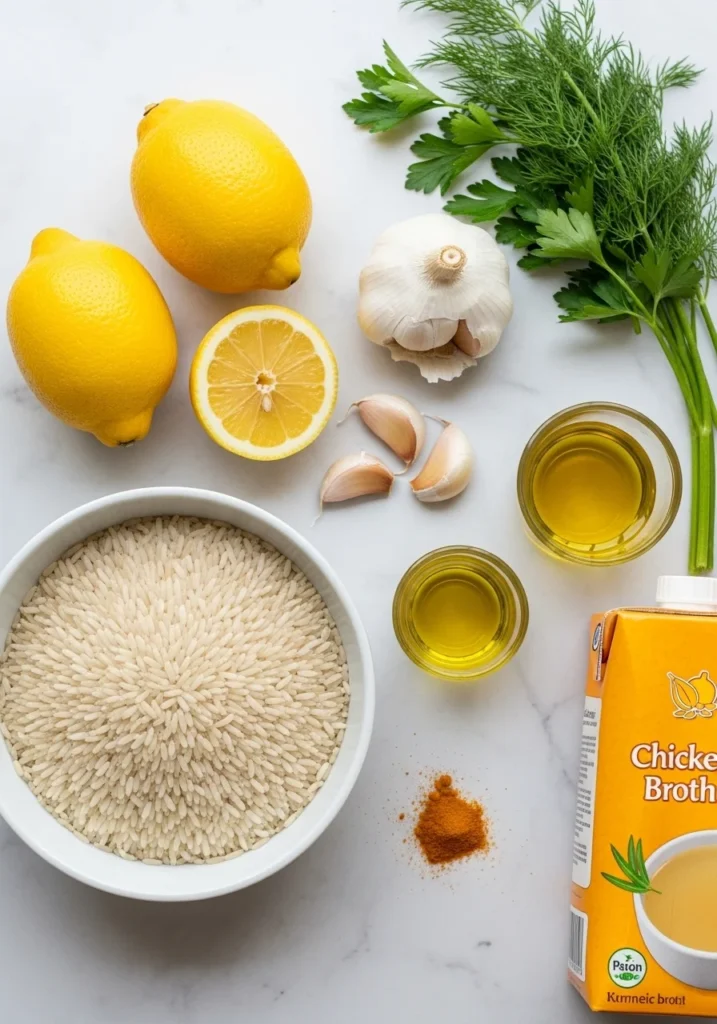
Before you fire up the stove, here’s a quick look at what goes into authentic Greek lemon rice and why each ingredient matters:
| Ingredient | Role in the Dish | Substitution |
|---|---|---|
| Long-grain white rice (basmati or jasmine) | Fluffy texture; absorbs flavor well | Brown rice (adjust cook time) |
| Chicken broth | Depth of savory flavor | Vegetable broth works great |
| Fresh lemon juice | That signature bright, tangy lift | Bottled lemon (less vibrant) |
| Olive oil | Richness, sautéing the base | Butter for a richer result |
| Garlic | Savory backbone | Garlic powder in a pinch |
| Fresh dill or parsley | Herby freshness | Dried herbs (use half the amount) |
| Turmeric (optional) | Golden color, mild earthiness | Simply omit — totally fine |
| Lemon zest | Extra citrus depth | Skip if you don’t have a zester |
How to Make Greek Lemon Rice from Scratch
Here’s the step-by-step method that gets you fluffy, flavorful lemon garlic rice every single time. No mushy rice. No gummy clumps. Just perfect, pillowy grains.
- Rinse your rice. This step is non-negotiable if you want fluffy results. Rinse under cold water until the water runs clear — you’re washing off excess starch that causes stickiness.
- Toast in olive oil. Heat olive oil in a medium saucepan over medium heat. Add the rinsed, drained rice and stir for 2–3 minutes until the grains turn just barely golden. This builds a nutty base flavor.
- Sauté the garlic. Add minced garlic (2–3 cloves) and cook for 30 seconds until fragrant. Don’t let it brown.
- Add broth and lemon. Pour in your broth (chicken or vegetable, about 2 cups per cup of rice), add the lemon juice, lemon zest, and a pinch of turmeric if using. Season with salt.
- Simmer and steam. Bring to a boil, then reduce to the lowest heat, cover tightly, and cook 15–18 minutes. Do not lift the lid.
- Rest, then fluff. Remove from heat, let it steam covered for 5 more minutes, then fluff with a fork. Stir in fresh herbs last.
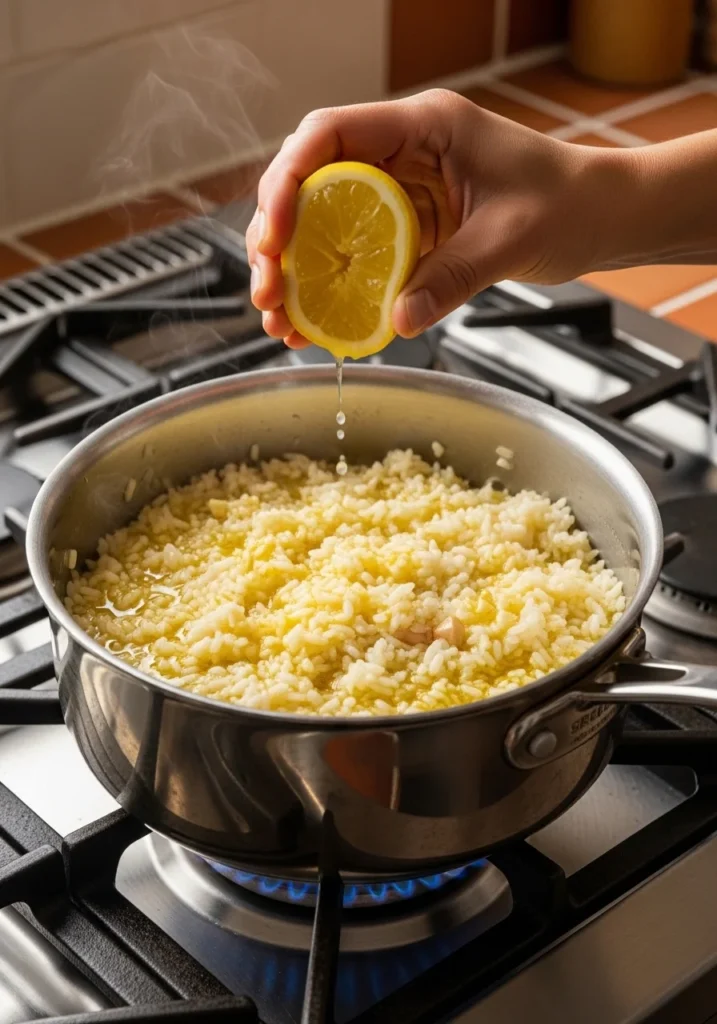
Pro tip
Always add your fresh herbs off-heat. If you stir in dill or parsley while the pot is still on the stove, the heat dulls their color and flavor almost immediately. Off-heat, they stay vibrant and fragrant.
What Type of Rice Works Best?
The short answer? Long-grain white rice. Basmati is the gold standard here — it’s fragrant, light, and cooks up beautifully separate. Jasmine rice is a close second with a slightly floral note that plays well with lemon.
Medium-grain rice like Arborio will turn creamy and sticky — not what you’re going for. Short-grain rice? Same problem. You want individual, fluffy grains that soak up the lemony broth without becoming a clump.
As for brown rice: yes, you can use it. But add about 15 extra minutes of cook time and a splash more broth. The result is heartier, nuttier, and a little less delicate — but still delicious, and genuinely good if you’re after a more wholesome version.
Chicken Broth vs. Vegetable Broth: Does It Matter?
Honestly? Both work. Chicken broth adds a deeper, more savory foundation that makes the rice taste richer. Vegetable broth keeps it lighter — and obviously makes it fully vegetarian.
I’ve made this one pot Greek rice both ways, and here’s my take: if you’re serving it alongside roasted chicken or lamb, go chicken broth — it harmonizes beautifully. If it’s going next to grilled fish or a vegetable main, vegetable broth is actually the better call. Lighter, cleaner flavor.
Just don’t use water. Please. Water produces rice that tastes like… water.
“The broth is your canvas. Make it a good one.”
How Much Lemon Juice — And Can You Skip the Turmeric?
For one cup of dry rice, I use 3 tablespoons of fresh lemon juice plus the zest of one lemon. That’s enough to be clearly lemony without being puckeringly sour. If you’re sensitive to acidity, start with 2 tablespoons and taste before adding more after cooking.
Here’s the thing about turmeric: it’s optional, but it’s not doing nothing. It gives the rice that gorgeous golden hue and adds a faint, earthy warmth. But if you don’t have it? Skip it entirely. The flavor of authentic Greek lemon rice doesn’t depend on turmeric at all — some traditional recipes never include it. The lemon and herbs are doing the heavy lifting.
The Best Herbs for Greek Lemon Rice
Herbs are where you can really make this dish your own. Here’s a quick rundown of what works:
- Fresh dill — The classic choice. Feathery, slightly anise-like, and absolutely gorgeous with lemon. Lemon dill rice is a combination that simply cannot be argued with.
- Flat-leaf parsley — Bright, grassy, clean. Works with literally everything. If you’re unsure, use parsley.
- Dried oregano — Very traditional in Greek cooking. Use just a half teaspoon — it’s assertive and earthy.
- Fresh mint — Unexpected but surprisingly lovely, especially in summer.
- Thyme — Adds a woody, savory depth. Great when you want the rice to lean more herbal than citrusy.
My personal go-to is a combination of fresh dill and flat-leaf parsley. The dill brings the Mediterranean character; the parsley keeps it fresh and balanced. Try it once and you’ll understand why.
Can You Make Greek Lemon Rice in a Rice Cooker?
Yes — with a small adjustment. Sauté your garlic in a separate pan with olive oil first (just 30 seconds), then add everything to the rice cooker: rinsed rice, sautéed garlic, broth, lemon juice, and turmeric. Set it to the standard white rice setting and walk away.
The one thing you lose in a rice cooker is the toasting step — that 2-minute sauté that adds nuttiness and depth. If you don’t care about that, the rice cooker version is perfectly tasty and requires almost zero effort. Stir in the fresh herbs after the cycle finishes.
How to Keep It Fluffy (and Not Sticky)
Sticky rice is usually the result of one of three things: too much water, lifting the lid too early, or skipping the rinse. Here’s how to avoid all three:
- Rinse the rice until the water runs clear. Non-negotiable.
- Use the right ratio: 1 cup rice to 1¾–2 cups liquid. Err on the lower side for fluffier results.
- Don’t peek. Lifting the lid during cooking releases the steam that’s doing the work. Leave it alone for the full cook time plus the 5-minute rest.
- Fluff with a fork, not a spoon. A fork separates the grains; a spoon mashes them together.
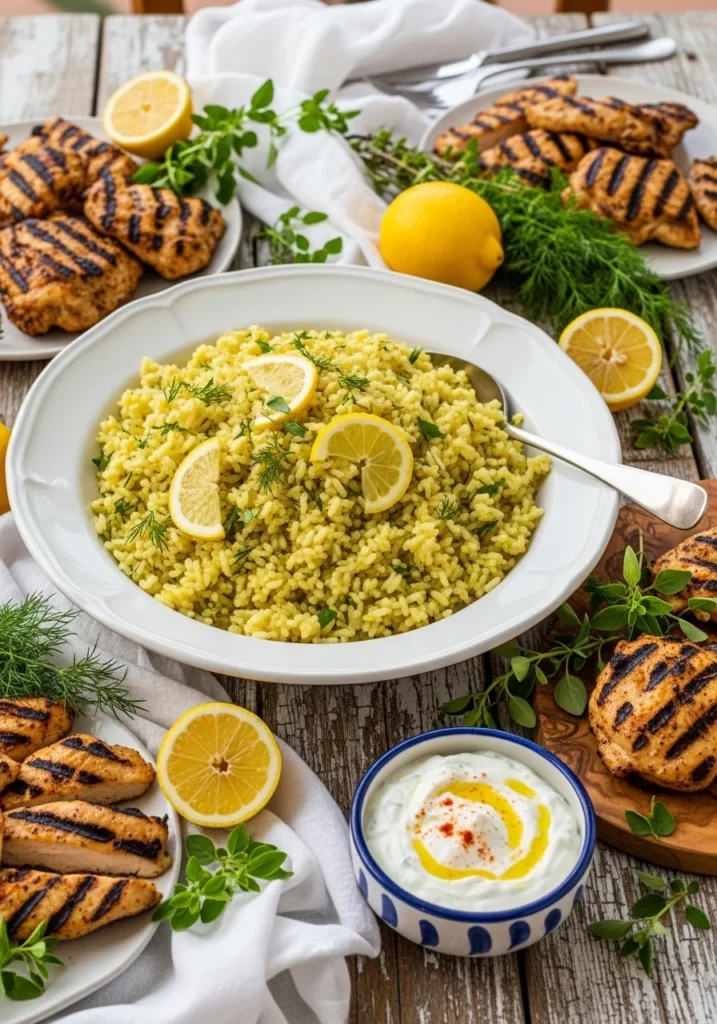
What to Serve with Greek Lemon Rice
This Greek rice side dish is wonderfully versatile. Here are the pairings that work especially well:
| Protein Pairing | Why It Works |
|---|---|
| Grilled chicken thighs | Classic. The lemon echoes marinades and the rice soaks up the juices beautifully. |
| Baked salmon or sea bass | The citrus brightens both and keeps things light. |
| Lamb chops or roasted lamb leg | Rich, gamey meat loves a bright, acidic counterpart. |
| Shrimp souvlaki | Made for each other. Serve with tzatziki and call it a feast. |
| Chickpea stew or roasted vegetables | Perfect for a plant-forward meal — hearty and satisfying. |
It also works brilliantly alongside a simple Greek salad, a dollop of tzatziki, and some warm pita bread. Honestly? That alone is dinner.
Greek Lemon Rice Recipe
Ingredients
Method
- Rinse the rice under cold water until the water runs clear. Drain well.
- Heat olive oil in a medium saucepan over medium heat. Add drained rice and toast, stirring, for 2–3 minutes until grains smell nutty.
- Add minced garlic and cook 30 seconds until fragrant. Do not brown.
- Pour in broth, lemon juice, lemon zest, turmeric, salt, and pepper. Stir to combine.
- Bring to a boil over medium-high heat. Reduce to the lowest setting, cover tightly, and simmer 15–18 minutes.
- Remove from heat and let steam, covered, for 5 minutes. Do not lift the lid early.
- Fluff with a fork. Fold in fresh dill and parsley. Taste and adjust salt and lemon. Serve immediately.
Notes
- For brown rice: increase liquid to 2¼ cups and cook 40–45 min.
- Always add fresh herbs off-heat to preserve color and flavor.
- Leftovers keep refrigerated up to 4 days. Reheat with a splash of broth.
- Dried herbs can substitute fresh — use half the amount.
- For extra richness, swap 1 tbsp olive oil for butter.
Frequently Asked Questions
Is Greek lemon rice the same as rice pilaf?
They’re closely related but not identical. Greek lemon rice borrows the toasting technique from pilaf but leans heavily on lemon and Mediterranean herbs. Traditional pilaf can be made without any citrus at all — Greek lemon rice would feel naked without it.
Can I make this with brown rice?
Absolutely. Brown rice adds a nuttier flavor and more fiber. Increase the liquid by ¼ cup and extend the cook time to about 40–45 minutes. The texture will be chewier, but the lemony-herby flavor is just as good.
Can I make it ahead of time?
Yes! Store it in an airtight container in the refrigerator for up to 4 days. When reheating, splash in a little broth or water and warm over low heat, stirring gently. Add a fresh squeeze of lemon and some fresh herbs after reheating to revive the brightness.
Can I freeze Greek lemon rice?
You can, though the texture softens slightly after freezing. For best results, freeze in single-serving portions and reheat from frozen in the microwave with a damp paper towel over the top.
Can I make it without turmeric?
Yes — and many traditional Greek recipes don’t use it at all. Turmeric is mainly there for color and a subtle earthy note. Skip it freely without affecting the core flavor profile.
The Bottom Line
Greek lemon rice isn’t fancy. It doesn’t pretend to be. What it is, is reliable, deeply flavorful, and endlessly versatile — the kind of side dish that quietly steals the show at the dinner table.
A good rinse, quality broth, generous lemon, and a handful of fresh herbs. That’s really all it takes to make something that tastes like it came from a sun-drenched taverna somewhere along the Aegean coast. Even if you’re making it in a Chicago apartment in January.
Now go make a pot. And maybe squeeze a little extra lemon, just because you can.
If you loved this recipe as much as we did, don’t forget to leave us a comment below ★★★★★. Follow cookingrecipeshub on Pinterest, Facebook, and Instagram, too!
For more delicious recipes, visit our sister site, servolamag
More Recipes For You To Try!
- Peach Crumb Bars: The Easiest Way to Turn Ripe Peaches Into Pure Gold
- Easy Peach Cobbler Recipe: The Only Guide You’ll Ever Need
- 15 Easy Crockpot Chicken Recipes That Basically Cook Themselves
- Strawberry Rhubarb Pie: The Classic Recipe That Never Gets Old (And Tips to Nail It Every Time)
- Graduation Cupcakes: 15 Easy Ideas to Celebrate the Class of 2026